


I found the trip to Fayette County to be very rewarding, informative, and beneficial to better understanding the community that we are working with. Coming in with little expectations and previous knowledge (other than the research we had done before) I was able to learn a lot and understand the community more.
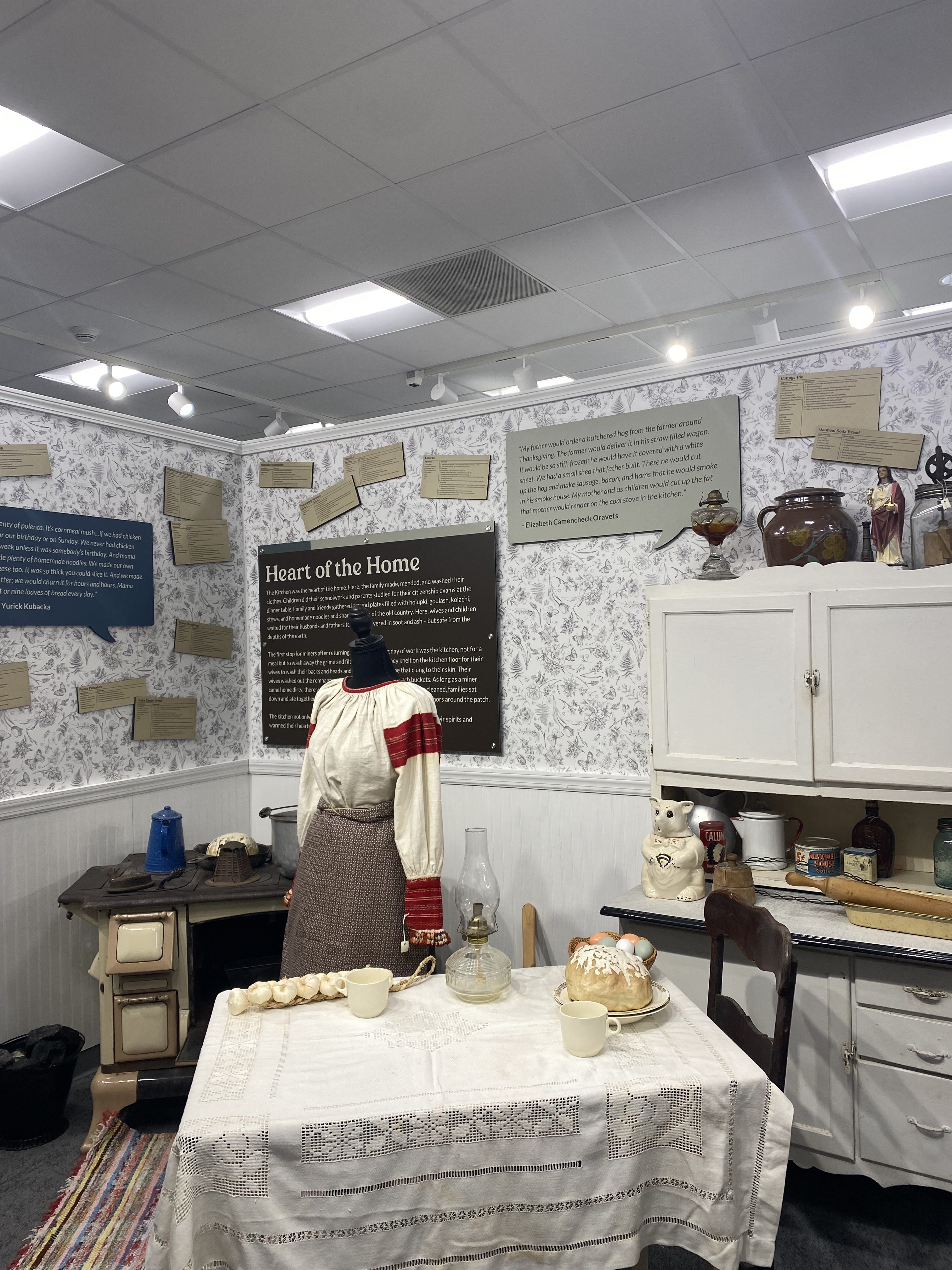
There were many important community assets that I identified during the site visit. I think most importantly the work of Michael and Dan and the Fayette County Cultural Trust cannot be overstated and I was really surprised by how much impact and work they were actually doing in Fayette County for example with the business classes, black-box theatre, the Canteen, etc. I think that Fayette County has a really strong asset in its rich culture and history and I saw elements of that being highlighted in the Canteen and in the Coal and Coke Heritage Center. There are also a lot of natural assets that could benefit the community including the bike trail which could provide economic benefits to the community as well. I think there is a lot of work that we can still do to continue identifying the strengths and assets of the community. We should continue to talk to our business owners and the Fayette County Cultural Trust but also talk to other members of the community and get their perspective on their county could help us as outsiders see where the strengths and assets are.
Something that surprised me about the community was how much of an impact the Fayette County Cultural Trust actually has and how much work Michael and Dan do for the community. It seems that the work that they are doing is actually engaging and benefiting people, especially the Canteen and The Fayette County Entrepreneurial and Educational Center. The results of their hard work and effort was so impressive and admirable. I was also surprised in some ways with the emphasis on culture and history that we were able to see. In the Coal and Coke Heritage Center I enjoyed learning about that aspect of Fayette county’s history and how much work Abby had put into the museum and archives. While it is expected that the closure of the Penn State Fayette County regional campus impacts the community economically, I was surprised by how much shared history and archived collections are now under threat because of it and how little of a voice the local people and staff at regional campuses have in decisions surrounding it.
There are many links that can be made from the course readings and what I experienced in the site visits. We discussed a lot about how to be good team partners and to be open minded and get to know the community that we are working with. Being able to actually be in Fayette County and speak to the community there was a really good exercise of that. Additionally, in the most recent course reading, the “Civic Engagement as Democratic Learning” we discussed a lot about the connection between institutions and communities and how sometimes large public-related universities such as Pitt can find themselves not “giving back” and not engaged with communities. One connection with this that I saw was that courses such as ours are more individual-focused and involve human connection and understanding. On this trip we were able to meet the community and understand Fayette County a little more as outsiders, even if it’s on a small level. To make genuine connections and understanding like that is part of the civic engagement that is beneficial to communities and people and ensures that the work that we do is actually meaningful, for us as the students but also for the community that we seek to positively contribute to.
Although our experience in Fayette County was limited, I think having identified some community assets allows us to start thinking about initial ideas to spur economic development. As we discussed in class, there are a lot of underutilized assets. I think getting more people to engage with the Fayette County Cultural Trust and the resources that it offers would be beneficial to the community. Additionally, I was surprised by how many empty buildings there were and how little economic, pedestrian, and community activity there seemed to be in the main parts of town. Having support and aid for local business would be beneficial in bringing more life and economic activity to Fayette County. Finding ways to attract business and employers to operate and interact within Fayette County is also something to look at.
Additionally, there seems to be an emphasis throughout Fayette county on its history, which is a very good and important asset to have but at times it felt like there was a lack of clear vision for the economic future. Shifting to new industries (and local business) is a good way to spur economic development and using the historical and cultural assets of Fayette County to attract new industries (as well as tourism) is something that Fayette County could expand on.
Some next steps for the project include continuing to get to know the area and talk to community members, specifically our individual businesses. We still have a lot of market research to do for these businesses and learning about how to best support and provide help to them is a good next step. Additionally, we should continue getting to know and understanding the community so continuing to be involved and doing research on Fayette County. Having identified a lot of the community assets on this trip and in previous research is a good jumping off point for our next steps of learning how to use these assets to benefit the community and the local businesses.
Overall, I really enjoyed this opportunity to learn more about Fayette County and the community. I have had little previous experience with Fayette county and what the Appalachian region means and looks like in Pennsylvania so I really enjoyed learning about the history, community, culture, and work that is currently being done in the area. I look forward to learning more, working with the local businesses, and being able to have a positive and meaningful engagement with the community.


