


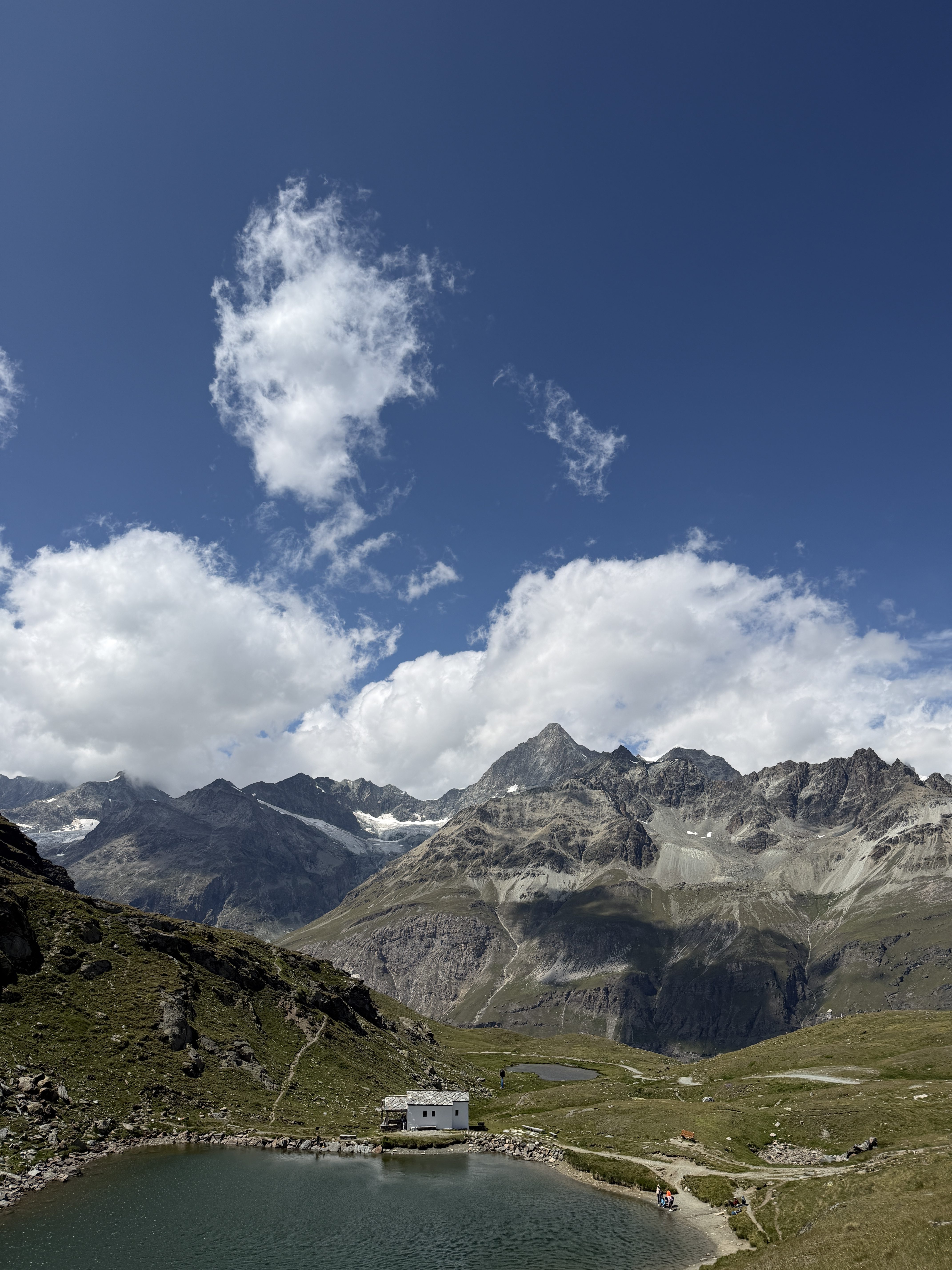
Since coming back Stateside over the last two weeks, I can confidently say I missed home, but my view of home will never be the same. Spending 10 weeks in Switzerland changed what I thought was possible. It’s hard to believe that a few weeks ago I was several thousand meters in the air and looking at the glaciers of the Alps. Yet, despite the views, I miss the work the most and the people I met along the way who traveled with me on late-night trains and hiked with me on multiple-mile stretches.


In all of my blog posts, I haven’t spoken much about the work that I’ve done. One thing has been starkly different: the work that I did there, I was able to shape with my own hands and present myself. I found a different type of control that others I met shared. My project focused on understanding clinical outcomes related to an under-researched immune organ in the context of radiotherapy. To evaluate this, I did extensive charting and statistical analysis, learned to code in Python to run advanced scripts and deep-learning models, and worked in a new healthcare setting. The best part of the job, however, was the espresso machine that freshly ground and made espresso or coffee (depending on how tired I was). To say working on this project was awesome is an understatement; working, living, and enjoying Switzerland was one of the best decisions I could have made.
Academically and professionally, I left Switzerland with more than I expected to. I showed up having never written a real line of Python and left having built scripts that ran statistical models and deep-learning segmentation on a full patient cohort. I learned how to structure a chart review, think through survival analysis, and tell when a finding is real and when it’s just noise. I’ll carry those skills into whatever comes next. What changed the most, though, was presenting work that was mine. When you build something with your own hands, you can’t fall back on someone else’s methods; you have to know why you made every choice, and you have to defend it when someone pushes. Answering hard questions about my own analysis and realizing I actually could have done more for my confidence than any course I’ve taken.


For students considering this, the thing I’d prepare for is that you aren’t just joining a new project, you’re joining a new system. The hospital ran differently than anything I’d seen at home: different software, different rules around patient data, different expectations about how much you’re supposed to figure out on your own. My instinct early on was to wait until I understood everything before I asked anything, and nothing slowed me down more. Ask the obvious question in your first week instead of your fourth. Learn how your group actually works rather than how you assume it works, and give yourself a little time to feel useless before you feel useful. That adjustment is part of the work, and getting through it is what made the rest of the summer possible.
Last but not least, pack less than you expect because it’s much more fun to buy things in a new place than it is to bring them.