


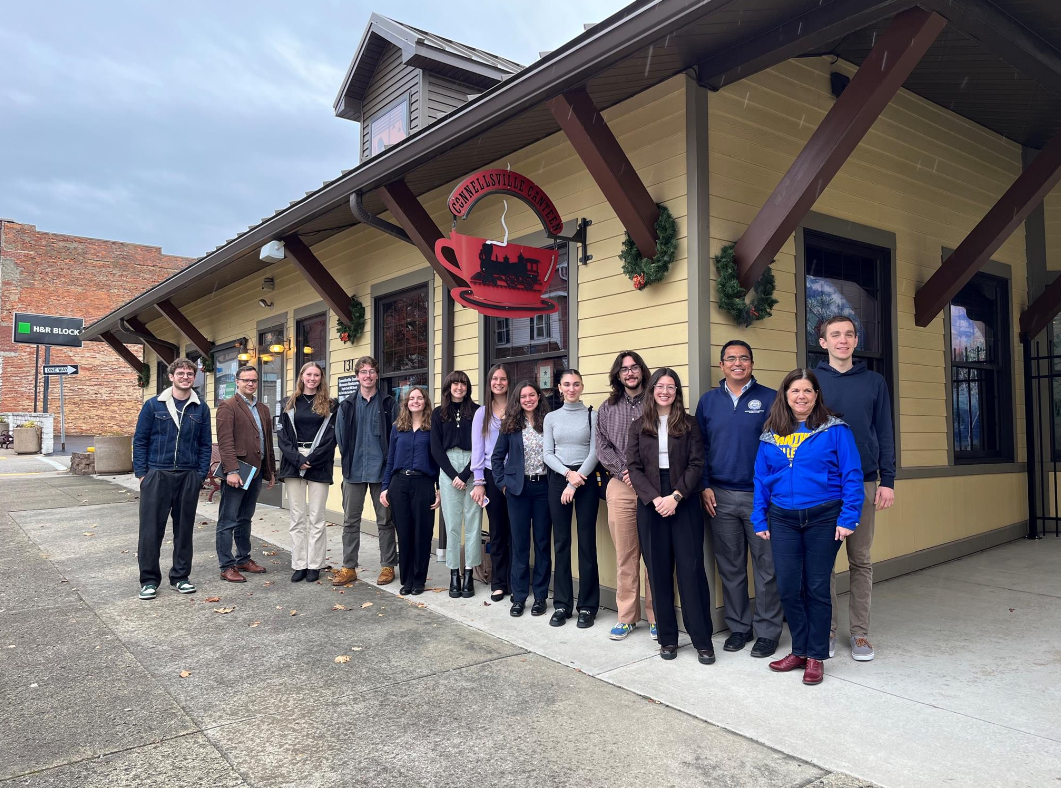
The final deliverables that the business cohort, consisting of myself, Franny and Ava, focused on supporting the Connellsville Entrepreneurship and Education Center. This newly constructed building aims to serve as a community resource for education and job training to boost economic prospects in the region. Though spacious modern classrooms were built, there was a need for actual content and programs to deliver.
Keeping that context in mind, we developed two main projects:
- A training needs assessment survey intended to gauge the precise interests and desired skills of Fayette County residents. Understanding the types of educational offerings most relevant to locals will allow the Center to tailor its offerings accordingly. The data we compiled can inform future student groups on how to iterate on program topics and format based directly on community input.
- A hands-on workshop helping small business owners expand their reach through the popular online marketplace Etsy. Franny tapped her prior experience selling homemade products on Etsy to design a tutorial session on creating attractive listings, low-cost digital promotion tactics, packaging best practices, and more. Delivery will include PowerPoint slides, sample products to demonstrate key points, and take-home tip sheets. We envision a longer-term partnership between Pitt OSHER and the center, as our audience would consist largely of people who are post-college or have no degree but still interested in learning more about topics and ideas that are both practical and interesting.
Along the way to producing these deliverables, we learned a lot about potential training ideas from the community and had memorable discussions with kind, personable, and bright people in Fayette County. The locals were welcoming and seemed genuinely invested in revitalizing the region. It was inspiring to witness their care and tenacity building a better future, even amidst day-to-day struggles that many face. We found a wealth of insights not just on educational programming possibilities, but what gives the region its character, challenges, and dreams. Our team approach those conversations seeking to listen first, then explore how our skillsets might assist the goals already flowing from residents themselves.
My perspective on Appalachia has in many ways changed. For starters, the diversity of the region was a bit different and broader than what I had imagined, stretching from Pittsburgh all the way down to northern Alabama and cutting through a lot of Kentucky and North Carolina. This shift was from some of the readings and in DC, when we saw what other universities from states like West Virginia, Tennessee, and Alabama among others, had been up to with similar tasks and budgets, but different regions of Appalachia.
Among the different towns that were being covered, trends began to appear. The main takeaways largely revolved around highlighting the value of industry and education in small-town communities. Many Appalachian communities have seen industries that once powered their local economies, like coal, steel, and manufacturing, fade or depart entirely. The loss of these economic engines has ripple effects across all aspects of community life, especially on young people, who leave in search of better job prospects or schooling elsewhere. Sadly, the problems were not unique to Connellsville, Uniontown, or Brownsville: if similar conditions are present, the vicious cycle afflicting Appalachia could happen to any region on Earth.
However, I was inspired by the good people of Fayette County who, despite the disadvantageous situation that their communities were facing, never backed down from helping others and fighting for a solution. I saw that fight in places like the Connellsville thrift store, who when we talked to them in October were preparing to try and make the holiday season as memorable and joyful as possible for the children of Connellsville. Despite facing difficult situations, they worked together to lift each other up. Our group approached our research looking to help in ways that fit the communities’ needs and culture. The people of Appalachia, who are just like anyone else and so kind and hospitable, deserve to be heard and helped in ways that respect their voices and humanity.
If I were asked in years to come how I would summarize this experience for my grandkids in one word, I would call it eye-opening. I didn’t just feel like a college student going through the motions in a one-credit course. I realized our group could collaborate to make meaningful progress assisting a struggling area. It was overall a really fun and memorable experience, and all of the trips were well thought out and put together. The project had its bumps and challenges, as any worthwhile endeavor does, but brought growth in my overall knowledge, capability and purpose.
I also really liked the cross-disciplinary nature of the course. As someone who is always trying to break out the business bubble, it was awesome hearing from different perspectives on different issues. We were all so different, but we were all brought together by a shared project of wanting to do right by Fayette County, Pitt, and the ACRI with the opportunity we were given. The project naturally selected candidates who were smart, driven, and passionate, and I think that anyone who saw us present or even just talk about it could see the passion and effort put into this project. My time researching Appalachian communities shaped my desire to live with empathy, understand structural disadvantages, and assist overlooked populations. It taught me those hopes are not naive, but completely within reach when pursued deliberately.
TLDR: I thoroughly enjoyed what I got out of the ACRI Regional Resilience project and I would gladly do it again.

