


Rachel Lenard, Urban Studies/GIS ’23


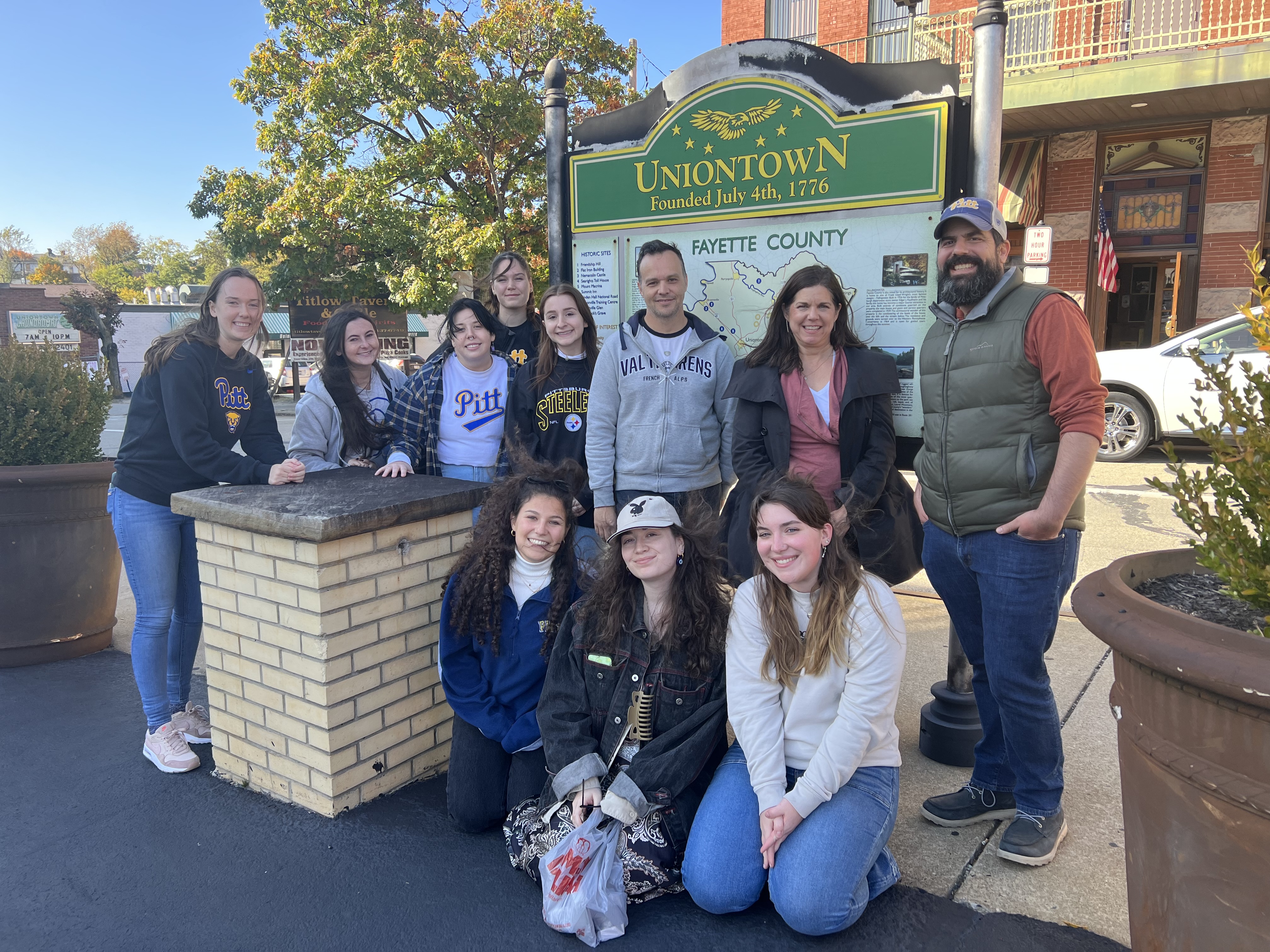
Hello everyone! My name is Rachel Lenard and I will be expanding more upon my previous blog post regarding my experience researching Fayette County, PA, through the Appalachian Teaching Project.
Our main set of deliverables were asset maps of location points throughout both Connellsville and Uniontown which we deemed important to the community and thus designated within the maps. The first asset map displayed a breakdown of points in both areas, organized by asset type. This was created to provide the communities, as well as their governments, with an interactive and easy-to-update display of notable locations. This map was embedded in an ArcGIS StoryMap, which functions as its own website while preserving the formatting of the maps. The last map produced was through Google Maps, a platform which is more familiar to the general public thus increasing accessibility.


We also created a proposal for Uniontown based off of many of the strengths we saw in Connellsville. This is titled “Celebrate Uniontown” and reflects much of what we learned from Uniontown’s community. The proposal included recommendations to update social media and governmental websites, as well as an internship program which can be implemented to increase community engagement and help educated young people learn and become interested in their local government.
There were other aspects we saw which were more long-term, thus we were not able to cover it all in a single semester. Since this is a 10-year project, however, we included research recommendations for future cohorts based on what we were not able to get to. This included the topics of broadband internet, as well as the opioid epidemic.
One of the biggest things I noticed while conducting the fieldwork was the passion people in these areas had for their community. While many were able to acknowledge the dire economic conditions, it never seemed like anyone had lost hope in their city. Every single person I talked to in both Connellsville and Uniontown loved where they lived. However, there were limited outlets of community engagement, which may stifle the ability of those who care about their area to have a say in its future. We attempted to fix this with our policy recommendations, however, it is a complicated process for these communities to not only gain trust in their government, but want to engage with it as well.
In my opinion, one of the most feasible ideas to promote economic development in these areas is implementing an internship program between local high schools and city governments. By engaging the educated youth in the area early on, we could see many eventually working in aspects of local government and mitigating the “brain drain” effect I mentioned in my previous blog post. There are numerous benefits to providing an internship to students, including the minimal cost and helping ease the workload of senior government officials. One of the main themes we saw with researching Appalachia as a whole, as well as the communities we visited, was the issue of capacity. By having more people to work on aspects of local governments, capacity can be increased at no cost. Additionally, the internship program seemed to fit in well in specifically the Uniontown area where students are already required to complete a senior service project. While discussing this idea to the mayor of Uniontown, he seemed particularly receptive to it and that it was something they were interested in moving forward with.
It is hard to simply summarize this experience because of the breadth of what I have learned throughout this course. It was by far the most impactful course I have ever taken, and I genuinely loved working with my group and growing close to them as we furthered our research. I have developed both a passion for service and a love for Appalachia through this project. It was also my first true experience with research. While I have taken classes in research, I had yet to apply it until this course. I am extremely thankful to both Pitt and the Frederick Honors College for providing all of the student researchers in this cohort an opportunity to work with the Fayette County Cultural Trust, a non-profit organization in Connellsville, to further our research on economic development within the county. All eight of us are continuing on with the project, which I believe speaks to how much each of us enjoyed the project and felt like we could make a difference. I am extremely excited to see the results of this project after 10 years and will continue to be engaged with this project as long as I am able to. I am incredibly optimistic about the future of Fayette County and can truly understand the passion those have for their respective communities.
As always, Hail to Pitt!

